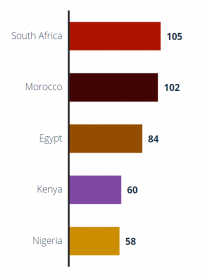
Despite historically limited economic and technological infrastructure, including banking services and fixed-line telecommunications, the number of online shoppers was expected to exceed half a billion by 2025. However, cash remains a widely used payment method, particularly in Egypt, Kenya and Morocco, while payment card ownership is still relatively low, averaging around 2% of the population.

According to the U.S. International Trade Administration, there are more than 400 local marketplaces across the African continent. Among them, Jumia stands out as one of the leading B2C marketplaces, with an established presence in several African countries.
For Italian companies, Jumia represents an attractive opportunity to expand into African markets, where demand for high-quality products, particularly Made in Italy goods, continues to grow.
Why Jumia Is a Strategic Platform for Exporting
Often referred to as the “Amazon of Africa,” Jumia was launched in 2012 and has successfully adapted its business model to the specific characteristics of African markets by developing an ecosystem that combines marketplace services, logistics and payment solutions.
The platform is particularly suitable for Italian companies looking to enter African markets without having to bear the high costs associated with establishing a physical presence on the continent or developing their own e-commerce infrastructure.
Jumia offers several advantages:
- Access to a large market: Jumia provides companies with immediate visibility across some of Africa’s largest e-commerce markets and access to millions of potential customers.
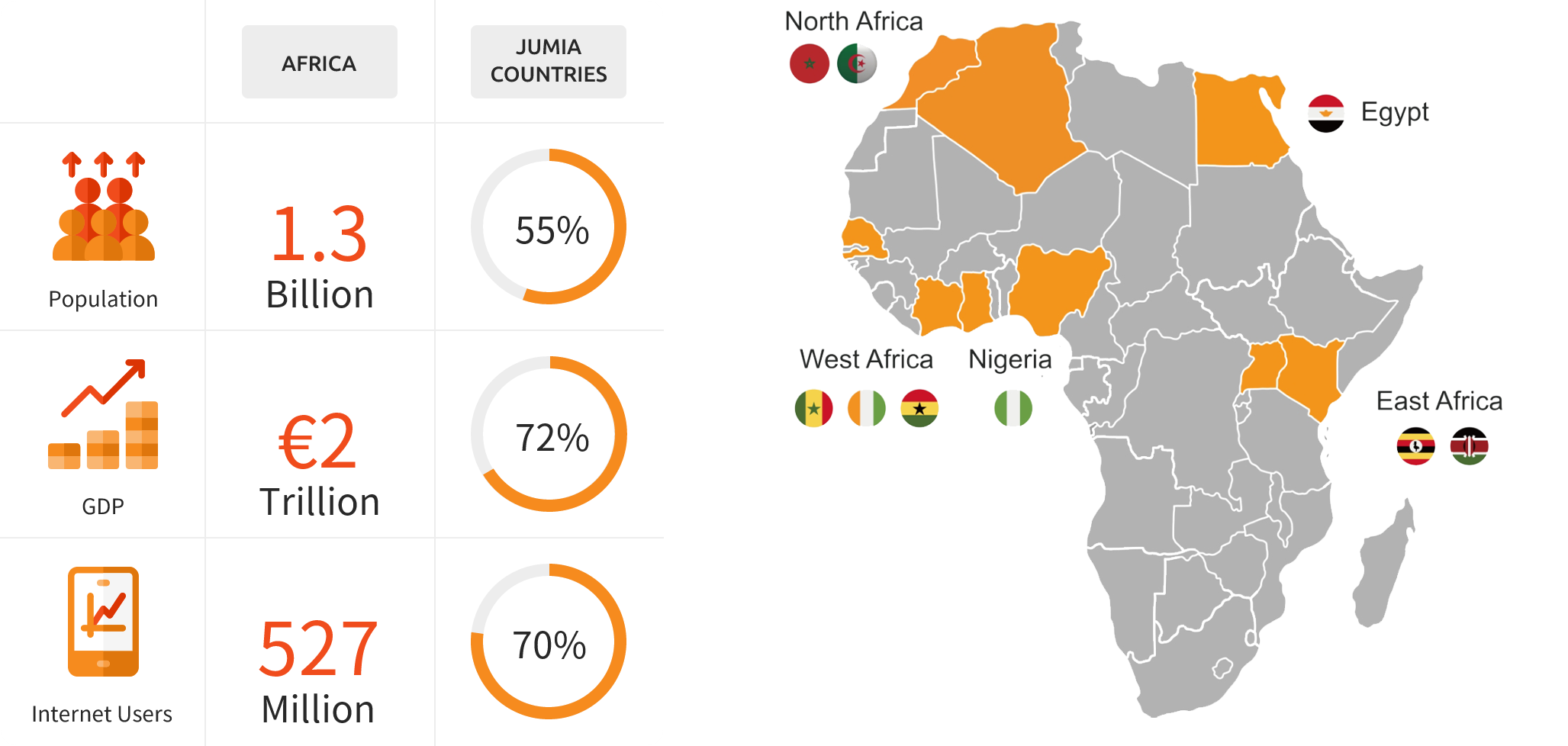
- Nine local marketplaces: Jumia operates dedicated marketplaces tailored to nine countries: Algeria, Egypt, Ghana, Côte d’Ivoire, Kenya, Morocco, Nigeria, Senegal and Uganda.
- Integrated logistics support: Jumia provides logistics solutions covering major African cities, helping companies reduce the costs and complexity associated with international shipping and export operations.
- Secure and flexible payment options: The platform manages payments in several local currencies, simplifying transactions for international sellers. Customers can also use cash on delivery, pay online using Mastercard, Visa and Verve cards through JumiaPay, or access instalment payment solutions such as Easybuy and CredPal.
Preparing to Sell on Jumia
Before starting to sell on Jumia, an Italian company should prepare carefully in order to address the specific challenges and characteristics of African markets.
The following preliminary steps are recommended:
- Market analysis: It is essential to understand the dynamics of African markets, which are characterised by considerable cultural, demographic and economic diversity. Companies should therefore analyse consumer trends in one or two of the countries supported by Jumia and identify the products with the strongest sales potential. This can be done by consulting market research, industry reports and studies provided online by organisations and partners such as Promos Italia. Particularly promising categories include fashion, electronics, home products and cosmetics. Companies should also monitor the products featured on Jumia’s homepage and in its Best Sellers sections to better understand local demand and purchasing trends.
- Assessment of Fulfillment by Jumia (FBJ) costs: Similar to Amazon, Jumia offers its own logistics service called Fulfillment by Jumia (FBJ). Sellers can use Jumia’s online pricing calculator to estimate logistics costs and determine appropriate selling prices.
- Brand protection: Once the market potential has been assessed, companies should consider registering a country-code top-level domain (ccTLD) in the selected country, such as
.eg, .ke or .ma, as well as protecting their trademark in the relevant market. - Product adaptation: To succeed on Jumia and in African markets more broadly, Italian companies may need to adapt their products to local requirements and preferences. This may include changes to packaging, instruction manuals and product listings in the appropriate languages, such as English, French or Arabic, as well as introducing product variants tailored to local consumer preferences.
- Competitive pricing: Price is a key purchasing factor in many African markets. Companies must therefore establish a competitive pricing strategy that takes into account shipping costs, marketplace fees, import duties and local taxation.
How to Register and Sell on Jumia

- Create a Payoneer account: Italian merchants must first open a free account on Payoneer.com and register as an e-commerce business owner. Registration is not immediate, as the information provided must be verified. Approval generally takes approximately three business days. During registration, applicants are usually required to provide a mobile phone number, including an Italian number, in order to receive a verification code, as well as a verified email address, identification documents for the company’s legal representative, bank account details and standard company information such as the registered office address.
- Register for a Jumia Seller Center account: Once the Payoneer account has been approved, companies can create a Jumia Seller Center account in English by selecting “Sell Globally on Jumia.” During the process, applicants may be required to provide various corporate documents, including a copy of the legal representative’s ID, an up-to-date company registration certificate or Chamber of Commerce extract, a screenshot of the Payoneer account and evidence of online sales generated through another sales channel during the previous quarter.
- Complete the New Seller Training course: The next step is to complete Jumia’s free New Seller Training course, which introduces sellers to the platform and its e-commerce processes.
- Create the product catalogue: Once registered, sellers can upload their product catalogue and make products available on the relevant national Jumia marketplaces. Product listings should contain accurate and detailed descriptions in the appropriate language, together with high-quality images designed to attract potential customers.
- Manage orders: Jumia notifies sellers whenever an order is placed. Sellers must process orders promptly and efficiently in order to comply with the platform’s delivery requirements.
- Shipping: Sellers can use Jumia’s own logistics solution, Fulfillment by Jumia (FBJ), or work with their own international shipping partners. In all cases, the platform requires transparency regarding expected delivery times and the condition of products upon delivery.
- Payments: Payments are managed through the platform, which handles local currency transactions and applies a commission to each sale. Depending on the product category and market, commissions may vary. Net proceeds are subsequently transferred to sellers according to the platform’s payment schedule.
Strategies for Success on Jumia
To maximise sales on Jumia, Italian companies should adopt targeted strategies tailored to both the platform and local markets.
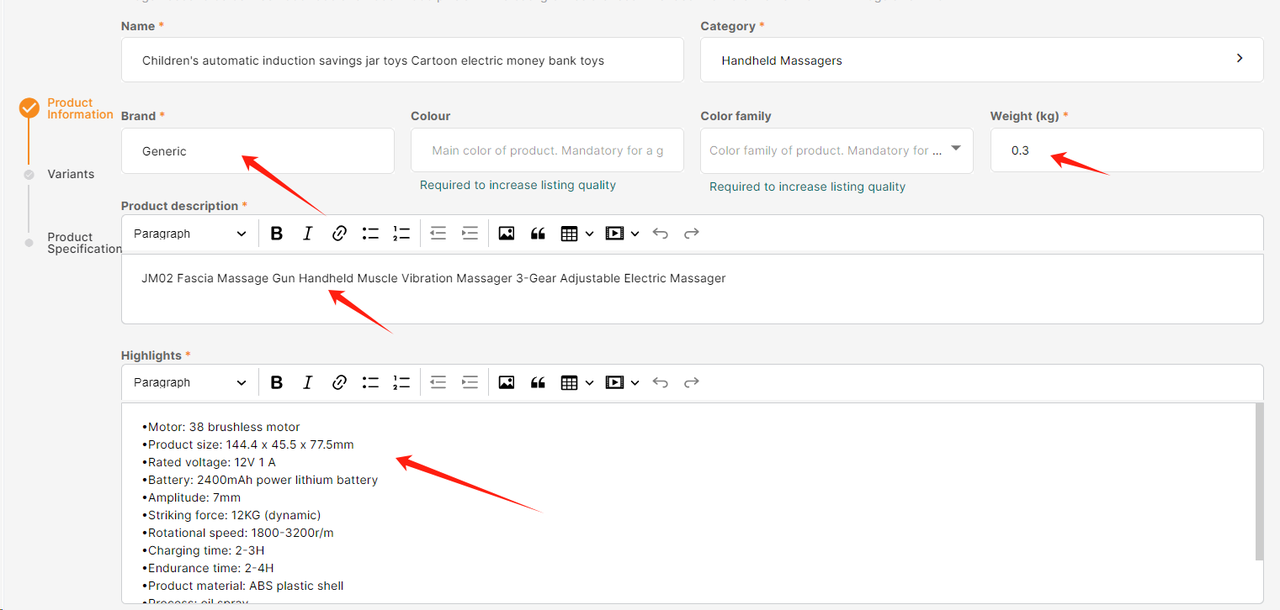
- Optimise product listings: Product listings should be SEO-friendly in order to improve visibility within Jumia’s search results. Using relevant keywords in product titles and descriptions is essential. Companies should also consider targeting long-tail keywords, meaning longer and more specific search phrases, rather than relying exclusively on broad, highly competitive single-word keywords. Jumia also provides APIs that can facilitate integrations with ERP systems and popular e-commerce platforms such as Shopify.
- Promotions and discounts: Special offers and temporary discounts can significantly increase sales. Jumia provides several tools for promoting products, including integrated advertising campaigns through Jumia Advertising.
- Customer service: High-quality customer service is essential for building a strong reputation on Jumia. Companies should be prepared to respond quickly to customer enquiries and manage returns, complaints and after-sales requests professionally.
- Reviews and feedback: Customer reviews have a significant influence on purchasing decisions. Sellers should therefore focus on delivering a positive customer experience and encouraging satisfied customers to leave feedback and reviews.
Conclusion
Jumia offers Italian companies a valuable opportunity to access some of the world’s most dynamic and rapidly evolving e-commerce markets.
With adequate preparation, an appropriate market-entry strategy and targeted digital marketing activities, Jumia can become an effective export channel for Italian products.
Success ultimately depends on understanding the specific characteristics of each market in which Jumia operates and adapting products, pricing, logistics and marketing strategies to the needs and expectations of local consumers.